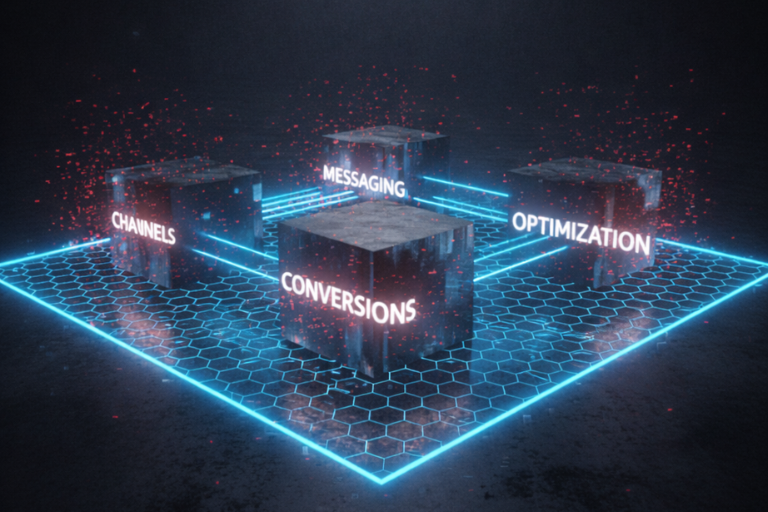




Most teams focus obsessively on the top of the funnel. More traffic. More reach. More clicks. And yet performance stalls. Pipelines look busy, but revenue tells a different story. That disconnect almost always points to the same place: the middle.
Awareness Is Rarely the Problem
If people are clicking, awareness exists. Interest has already been earned. Pouring more budget into the top only amplifies existing inefficiencies. When the middle is weak, more traffic simply means more waste.
Where Intent Breaks Down
The middle of the funnel is where prospects evaluate relevance, trust, and urgency. This is also where most funnels become vague. Messaging loses focus, follow ups feel generic, and next steps are unclear. Momentum dies quietly, without obvious failure signals.
Structure Beats Volume
High performing funnels are deliberate. Every interaction reinforces value and moves the prospect closer to a decision. There is no neutral step. Either intent increases, or it decays.
“Funnels don’t leak at the entrance. They leak where decisions are made.”
— Jordan Wells, Revenue Operations Consultant
Patterns We See Repeatedly
When funnels underperform, the same issues surface:
- Messaging shifts tone after the first interaction
- Lead qualification happens too late
- Progression between stages is unclear
- Metrics are too high level to expose friction
Fix the middle and everything changes. Conversion rates stabilize. Sales cycles shorten. Spend becomes efficient instead of hopeful. Growth stops depending on volume and starts depending on design. That is when funnels become predictable, scalable, and worth investing in.